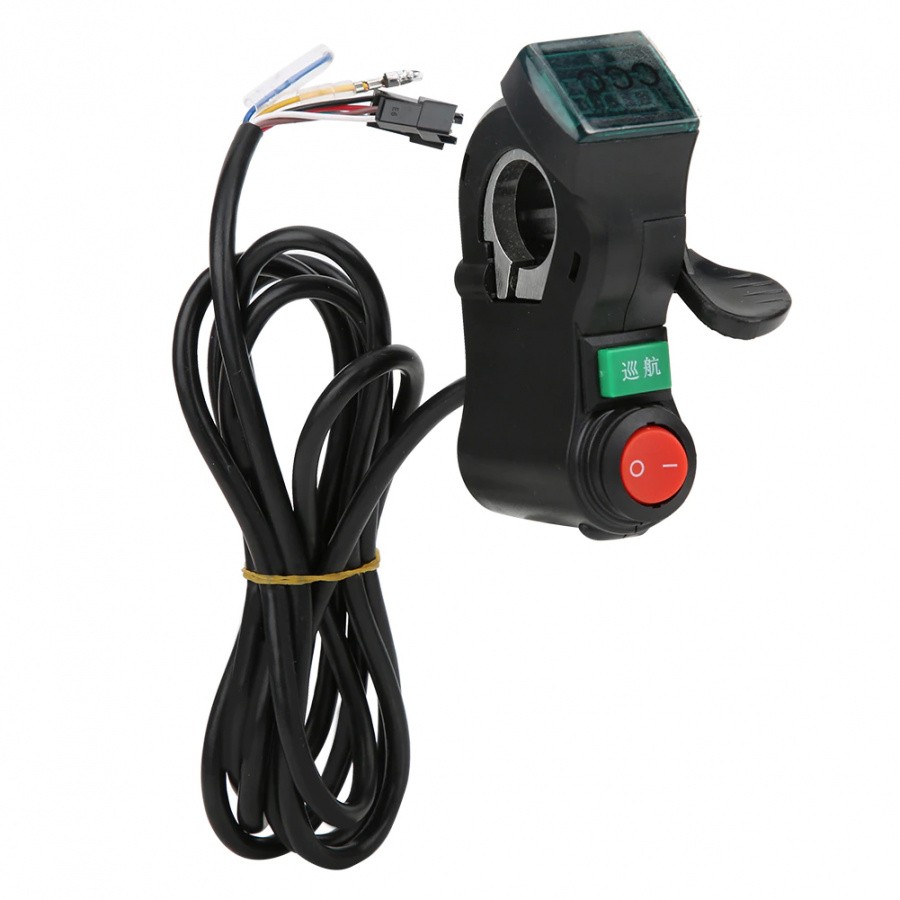
Hey everyone, let’s dive into the world of electric bicycle throttle handles! We’re going to cover everything from the basics of how they work to the different types available and how to connect them.
First off, let’s talk about the general information. Essentially, a throttle handle on an e-bike gives you direct control over the motor’s power. You twist it, and the bike goes. It’s a simple concept, but it’s a crucial component for many e-bike riders. It’s important to understand that the throttle is often used in conjunction with, or as an alternative to, Pedal Assist System, or PAS.
Now, let’s compare the throttle stick and the PAS system. The PAS system works by sensing how hard you’re pedaling. The harder you pedal, the more assistance the motor provides. It’s a great system for exercise and efficiency, as you’re actively involved in the propulsion. The throttle, on the other hand, provides power directly from the twist of your wrist. You don’t need to pedal at all to use it, making it ideal for situations like climbing steep hills or navigating heavy traffic. Many e-bikes offer both systems, allowing riders to choose the best option for their needs. Some riders prefer the exercise and efficiency of PAS, while others find the convenience and power of the throttle more appealing. It really comes down to personal preference and riding style.
What are the main advantages of using a throttle stick? Well, the most obvious advantage is the convenience. You don’t have to pedal at all to get assistance, which is particularly helpful when you’re tired, facing a steep incline, or simply want a more relaxed ride. It also provides a significant boost in power, especially when you need that extra push to accelerate quickly or overcome obstacles. Think of it as having an extra gear that you can engage instantly. This can be a lifesaver in challenging situations. Finally, it offers a level of control that PAS alone might not provide, allowing for precise speed adjustments.
Now, let’s explore the varieties of throttle sticks available. There are THREE main types: thumb throttles, lever throttles, and full-hand throttles. Thumb throttles are compact and easy to use, requiring only a small movement of your thumb to control the power. They’re popular for their discreet design and ease of use. Lever throttles, on the other hand, are operated by a lever similar to a motorcycle throttle. They offer a more precise and responsive control, especially at higher speeds. Finally, full-hand throttles are larger and require a more significant hand movement. They’re less common but can provide a more comfortable grip and better control for some riders. The choice really depends on your hand size, riding style, and personal preference. Consider trying out different types if you have the opportunity before making a purchase. Half-hand throttles are also available, offering a middle ground between thumb and full-hand options. They provide a good balance of control and comfort.
Finally, let’s talk about connecting the throttle to the controller. This is usually a straightforward process, but it’s crucial to follow the instructions provided with your specific throttle and controller. Generally, you’ll need to connect THREE or FOUR wires: power, ground, signal, and potentially a hall sensor wire. It’s essential to ensure that the wires are correctly connected to avoid damaging your e-bike’s components. If you’re not comfortable with electrical work, it’s always best to seek professional help. Improper wiring can lead to malfunctions or even safety hazards. Always consult your e-bike’s manual and the instructions that came with your throttle before attempting any installation or wiring. Safety should always be your top priority.
Okay, let’s dive right into checking your electric bicycle throttle handle. First things first, we need to see if it’s even working. Give it a try. Slowly twist the throttle, and watch the display on your bike’s control panel. You should see a clear increase in the power reading as you twist. If nothing happens, don’t panic, we’ll figure it out.
Now, why might your throttle not be working? There are a few common culprits. The most obvious is a simple connection problem. Check all the wires leading to and from your throttle. Make sure they’re securely plugged in and that there’s no damage to the wires themselves. Look for any breaks, frays, or corrosion. A loose connection is often the easiest fix. Another possibility is a faulty throttle sensor. This little component inside the throttle measures how far you’ve twisted it and sends that information to the bike’s controller. If it’s malfunctioning, it won’t send the correct signal, and your bike won’t respond. Sometimes, a simple cleaning can resolve this. Use compressed air to carefully blow away any dust or debris that might be interfering with the sensor. And finally, the problem could lie with the controller itself. The controller is the brain of your e-bike, and if it’s malfunctioning, it won’t receive or process the signal from the throttle correctly. This is a more complex issue that might require professional help.
Let’s talk about repairing your throttle stick. If you’ve identified a loose connection, simply re-seat the wires firmly. If you find a damaged wire, you might be able to repair it with electrical tape or solder, but be careful and make sure the repair is secure. If the problem is with the throttle sensor, replacing it might be necessary. This is usually a relatively straightforward process, but you’ll need to consult your bike’s manual or find a tutorial specific to your model. Remember, safety first! Always disconnect the battery before working on any electrical components.
- Читайте также:
Replacing the throttle stick is sometimes the best solution. If you’ve tried everything else and your throttle still isn’t working, a new one might be the answer. When choosing a replacement, make sure it’s compatible with your e-bike’s model and voltage. You can find a wide variety of throttle sticks online, including on sites like Aliexpress. Just remember to double-check the specifications before ordering to ensure a perfect fit.
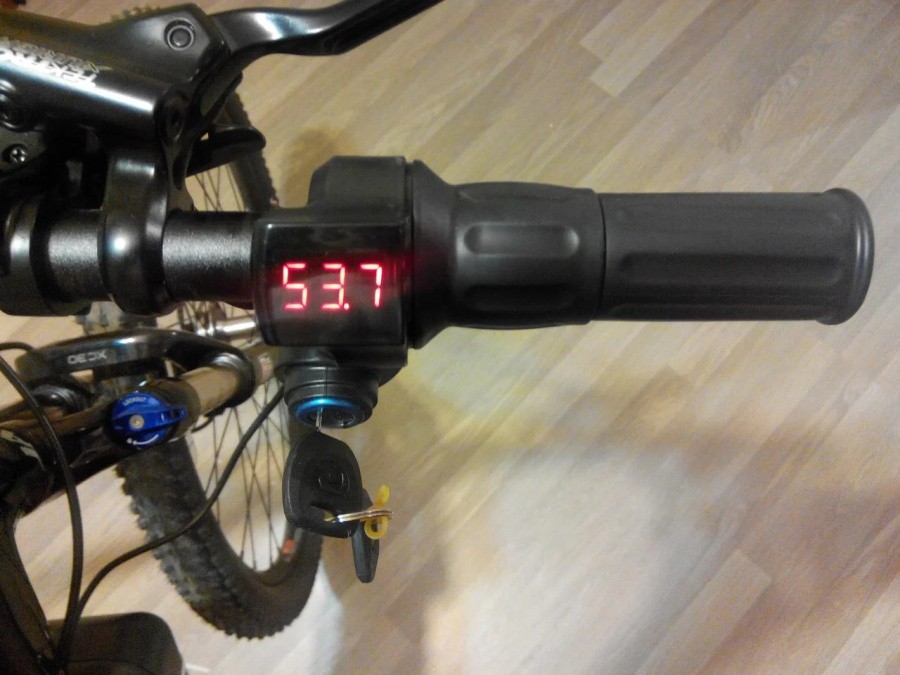
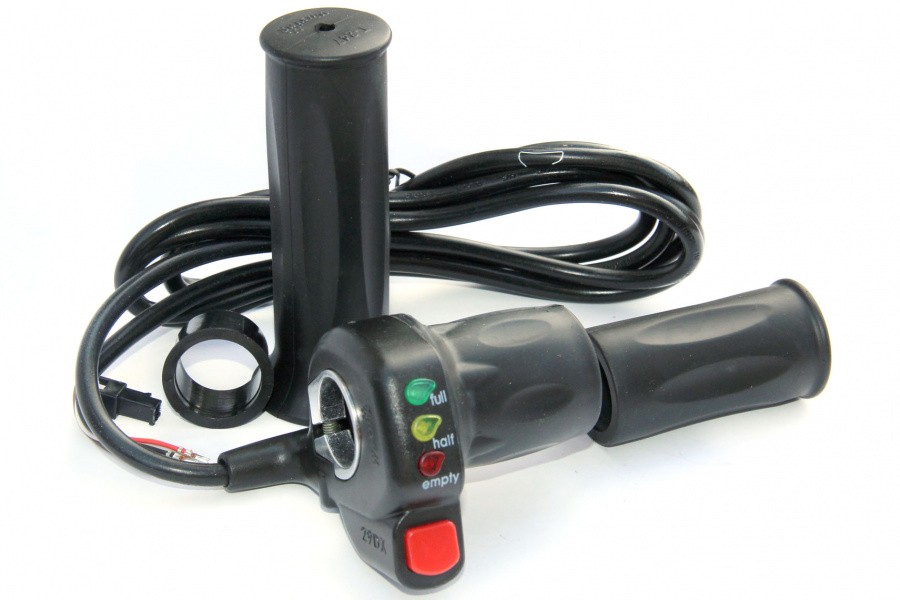
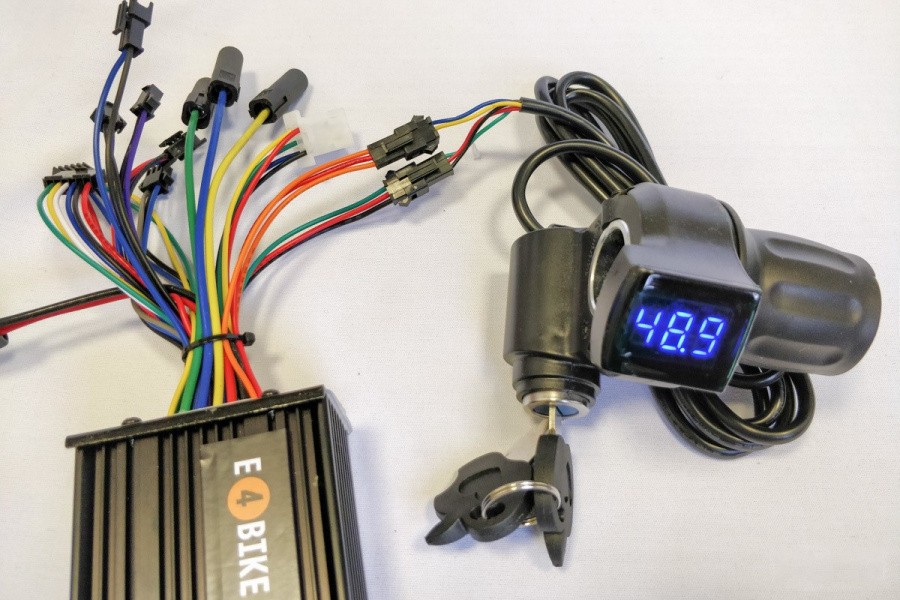
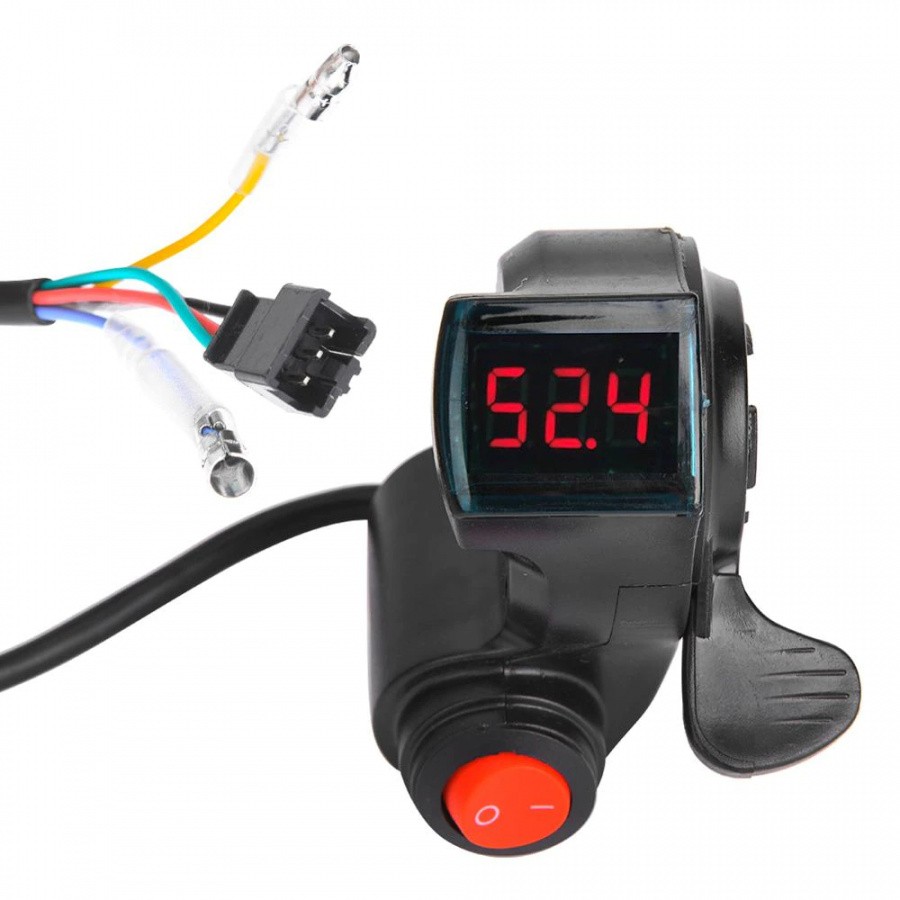
Now, let’s explore some different types of throttle handles. We’ll start with the motorcycle-style half-hand throttle. These often include a built-in voltmeter, giving you a quick glance at your battery’s charge level, and sometimes even an ignition switch for added convenience. Then there are thumb throttles. These are compact and easy to use, and many come with a voltmeter and a toggle switch for additional functions. Some even have a non-latching button, which can be useful for certain applications. We’ll look at a few examples, including a thumb throttle with just a voltmeter, one with a voltmeter and a toggle switch, and another with a voltmeter, a toggle switch, and a non-latching button. Each has its own advantages and disadvantages, so choosing the right one depends on your individual needs and preferences. Remember to always prioritize safety and compatibility when selecting a replacement throttle.