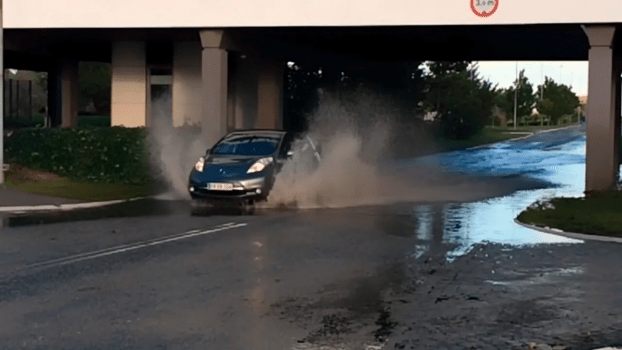
So, you’re wondering about driving electric cars in flooded roads? It’s a great question, and honestly, one that deserves a lot of attention. Let’s dive in. First off, the short answer is: YES, it’s dangerous. Driving ANY car through floodwaters is risky, but electric cars present some unique challenges.
Think about it: water and electricity don’t mix. That’s a pretty fundamental truth, and it’s incredibly relevant here. Electric vehicles, by their very nature, have high-voltage systems running throughout the car. We’re talking voltages in the range of several HUNDRED volts, easily enough to cause serious injury or even death if there’s a breach in the system and you come into contact with it. Floodwaters can easily compromise the car’s seals and insulation, creating pathways for that high-voltage electricity to escape. This isn’t just a theoretical risk; there have been documented cases of people being electrocuted while attempting to rescue stranded vehicles in floodwaters.
Beyond the immediate risk of electrocution, there’s also the damage to the car’s battery itself. Water can cause significant damage to the battery pack, leading to short circuits, overheating, and potentially even a fire. These batteries are incredibly complex and expensive to replace, so even if you manage to escape without injury, you could be facing a HUGE repair bill, or even a total loss of your vehicle. Remember, these aren’t just car batteries like in a gasoline car; they’re massive, sophisticated energy storage systems. Submersion can cause irreversible damage.
Then there’s the issue of the car’s electronics in general. Many critical systems in an electric car rely on sophisticated electronics, and water intrusion can easily fry these components. This could affect everything from the power steering and brakes to the infotainment system and even the ability to open the doors. Imagine being trapped inside your car because the electrical system has failed due to water damage – that’s a terrifying scenario.
Furthermore, the water itself can cause significant damage to other parts of the car. The motor, the transmission, and various other components are not designed to withstand prolonged submersion. Corrosion is a major concern, and even if the car seems to function normally after the flood, hidden damage could lead to problems down the line. This could mean expensive repairs or even complete failure of the vehicle.
Finally, let’s talk about the practicalities. Even if you manage to avoid immediate electrocution or catastrophic damage, driving through floodwaters puts immense stress on the car’s components. The water can damage the wheels, axles, and suspension, leading to handling issues and potential accidents. The depth of the water is also crucial; even relatively shallow water can be deep enough to damage the car’s undercarriage and electrical systems. Remember, you can’t always see what’s beneath the surface – there might be debris, potholes, or even deeper water than it appears. The risk simply isn’t worth it. Turning back and finding an alternate route is always the safest option.
So, we’re diving into a pretty crucial topic today: what happens when you mix electricity, cars, and water? It’s not a recipe for a fun afternoon, that’s for sure. Let’s talk about the consequences of water on an electric car’s battery.
First off, the battery itself is incredibly well-protected. Manufacturers go to great lengths to seal it against the elements. Think multiple layers of robust casing, specialized seals, and often even a waterproof coating. This is designed to prevent water ingress, which is the technical term for water getting inside. However, «waterproof» doesn’t mean «completely invincible.» Think of it like this: your phone might be water-resistant, but dunking it in a swimming pool for an hour is probably not a good idea. Similarly, while electric car batteries are designed to withstand splashes and rain, prolonged submersion or significant water damage can be a serious problem.
What happens if water does get in? Well, the most immediate concern is short-circuiting. Water is a conductor of electricity, and if it bridges the gap between the battery’s positive and negative terminals, you’ve got a problem. This can lead to anything from a minor malfunction to a complete system failure, and in extreme cases, even a fire. The severity depends on the amount of water, the location of the ingress, and the specific design of the battery system. It’s not a simple «one size fits all» scenario. Some batteries might experience a gradual degradation of performance, while others could suffer catastrophic damage. And remember, we’re talking about high-voltage systems here – we’re not talking about the NINE-VOLT battery in your smoke detector. This is potentially lethal stuff.
- Читайте также:
Beyond short-circuiting, water can also cause corrosion. Over time, even small amounts of moisture can lead to the degradation of battery components, reducing their lifespan and efficiency. This is a slower process, but it can significantly impact the long-term performance and reliability of your electric vehicle. Think of it like rust on a metal car body – it starts small, but it can eventually become a major issue.
Now, let’s talk about some related news stories. There have been instances reported of electric vehicles experiencing issues after being submerged in floodwaters, particularly during extreme weather events. These incidents highlight the importance of taking precautions during heavy rainfall or flooding. Many news reports detail the challenges faced by owners whose cars were damaged beyond repair due to water damage to the battery system. The repair costs can be astronomical, often exceeding the value of the vehicle itself. In some cases, insurance companies have even refused to cover the damage, citing the unpredictable nature of flood events. These stories serve as a stark reminder of the potential risks associated with driving electric vehicles in adverse weather conditions. It’s crucial to stay informed and to take appropriate measures to protect your vehicle. Remember, even if your car is designed to withstand some water exposure, prolonged submersion is a completely different ballgame. It’s always best to err on the side of caution and avoid driving through flooded areas.