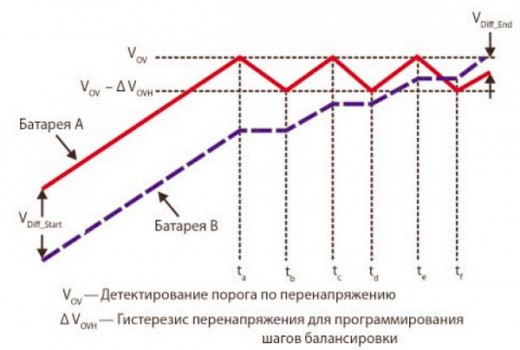
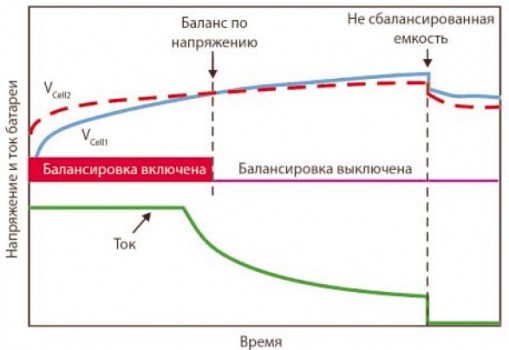
So, let’s dive right into battery unbalance. First up, what’s a battery charge balancer? Think of it as a tiny, but incredibly important, superhero for your battery system. It’s a device designed to ensure that all the cells within a battery pack – whether it’s in your electric vehicle, your power tool, or even your hobbyist drone – are charged evenly. Without a balancer, some cells might end up overcharged while others remain undercharged, leading to all sorts of problems. We’re talking reduced battery life, decreased performance, and even the risk of fire or explosion in extreme cases. It’s like having a team where some players are completely exhausted while others are barely breaking a sweat – the whole team suffers.
Now, let’s talk about charge equalization, the practice of making sure all those cells are at the same voltage. This is crucial because batteries, even within the same pack, aren’t perfectly identical. They have slight variations in their internal resistance and capacity. Over time, these differences become more pronounced, leading to unbalance. Charge equalization is the process of actively addressing this imbalance. It’s not just about topping up the low cells; it’s about carefully managing the charging process to bring all cells to a safe and optimal state of charge. Think of it like fine-tuning a musical instrument – you need to adjust each string individually to achieve perfect harmony. Neglecting this process is like playing a badly tuned guitar – it sounds awful and won’t last long.
How does a battery charge balancer actually work its magic? Well, it monitors the voltage of each individual cell within the battery pack. Using sophisticated circuitry, it identifies cells that are lagging behind and selectively applies a small amount of extra charge to those cells. This is done very precisely and carefully to avoid overcharging any cell. It’s a delicate balancing act, and that’s why a good quality balancer is essential. It’s like having a skilled conductor leading an orchestra – each instrument plays its part, but the conductor ensures they all work together harmoniously. A poorly designed balancer could be like a conductor who’s completely deaf – chaos would ensue!
Finally, let’s explore the different methods of balancing. There are several approaches, each with its own advantages and disadvantages. Passive balancing is a simpler method that relies on the inherent characteristics of the battery cells and the charging circuit to gradually equalize the charge. This is often sufficient for smaller battery packs with relatively low capacity. Active balancing, on the other hand, uses more sophisticated electronics to actively shunt excess charge from overcharged cells to undercharged ones. This is a more efficient and precise method, particularly useful for larger battery packs or applications where precise voltage control is critical. Choosing the right balancing method depends on the specific requirements of your battery system. It’s like choosing the right tool for the job – a hammer is great for some tasks, but you wouldn’t use it to paint a masterpiece. Understanding the nuances of each method is key to ensuring the longevity and safety of your battery system.
So, let’s dive right into battery unbalance. It’s a common problem, especially if you’re working with multiple batteries in a system, like in an electric vehicle or a large-scale energy storage setup. Essentially, battery unbalance means that the individual cells or battery modules within a system aren’t all at the same state of charge. One might be at EIGHTY percent, another at SEVENTY-FIVE percent, and another at only SIXTY percent. This imbalance can lead to reduced overall system performance, shortened lifespan, and even safety hazards. Think of it like a team of runners – if one runner is lagging significantly behind, the whole team’s performance suffers.
Now, let’s talk about passive methods for dealing with this. These are methods that don’t require active intervention or control systems. One common passive method is using matched cells or modules from the start. This means selecting batteries that have very similar initial capacities and internal resistances. The closer the match, the less likely you are to experience significant unbalance over time. Another passive approach involves careful charging and discharging practices. Avoid consistently deep discharging your batteries, as this can exacerbate imbalances. Similarly, try to avoid consistently charging to ONE HUNDRED percent capacity. Think of it like driving your car – you wouldn’t constantly floor it or leave it completely empty, right? The same principle applies to batteries. Regular, moderate use and charging cycles are key. Finally, proper thermal management is crucial. Uneven temperatures across your battery pack can lead to uneven charging and discharging rates, contributing to unbalance. Keeping your batteries at a consistent, optimal temperature is a passive way to mitigate this.
Active methods, on the other hand, involve directly addressing the unbalance as it occurs. One common active method is using a battery balancing system. These systems actively monitor the state of charge of each individual cell or module and then redistribute charge to equalize them. Think of it as a sophisticated referee ensuring fair play among your battery cells. These systems can be quite complex, often involving sophisticated algorithms and control circuitry. Another active method is cell equalization, which involves using specialized circuitry to directly transfer charge from higher-voltage cells to lower-voltage cells. This is a more direct approach to balancing, but it can be more complex to implement. Choosing the right active method depends on the specific application and the scale of your battery system. For smaller systems, simple balancing circuits might suffice, while larger systems might require more sophisticated solutions.
Now, let’s talk about choosing batteries for your system. This is crucial to prevent unbalance from the very beginning. First, always prioritize reputable manufacturers. They’re more likely to provide consistent and high-quality cells. Second, carefully review the specifications. Look for cells with similar capacities and internal resistances. The closer these parameters are, the better. Third, consider the operating temperature range. Choose batteries that can operate within the expected temperature range of your system to minimize thermal imbalances. Finally, don’t hesitate to consult with experts. If you’re working on a complex system, seeking professional advice can save you a lot of headaches down the line.
Finally, let’s touch on some related news and developments. The field of battery technology is constantly evolving, with new innovations aimed at improving battery life, safety, and performance. Researchers are constantly working on new materials and designs to address the challenges of battery unbalance. Keep an eye out for advancements in solid-state batteries, which promise improved energy density and safety, potentially reducing the likelihood of unbalance. Also, advancements in battery management systems (BMS) are constantly improving the ability to detect and correct imbalances in real-time. Staying informed about these developments can help you make informed decisions when selecting and managing your battery systems.
- Читайте также: