So, let’s dive straight into what Yaroslav Starukhin, who interviewed Shkondin himself, had to say about this groundbreaking invention. He painted a picture of a man deeply passionate about his work, utterly convinced he’d stumbled upon something truly revolutionary. Starukhin described Shkondin as incredibly meticulous, spending years refining his design, constantly tweaking and testing, driven by an almost obsessive need for perfection. He spoke of late nights in the lab, fueled by nothing but the sheer excitement of his discovery. According to Starukhin, Shkondin wasn’t just tinkering; he was driven by a profound belief in the potential of his motor to change the world. He felt he’d unlocked a fundamental principle of electromagnetism, a principle that had been overlooked for far too long. Starukhin emphasized Shkondin’s unwavering conviction, his almost childlike wonder at the sheer power and efficiency of his creation. It wasn’t just about the technology; it was about a paradigm shift in how we understand and utilize electromagnetic forces.
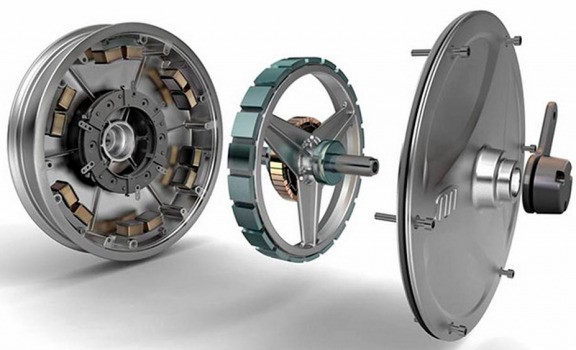
Now, what exactly did Shkondin discover? That’s the million-dollar question, isn’t it? From what Starukhin relayed, Shkondin’s innovation lies in a novel approach to electromagnetic propulsion. Instead of relying on traditional methods that involve significant energy losses through friction and resistance, Shkondin’s motor seemingly circumvents these limitations. He achieved this, according to Starukhin, through a unique configuration of magnets and coils, a carefully orchestrated dance of electromagnetic fields that generates continuous, powerful rotation with minimal energy input. The specifics are, understandably, shrouded in some secrecy, as Shkondin is understandably protective of his intellectual property. However, Starukhin did hint at a system that utilizes resonant frequencies and carefully calibrated magnetic fields to achieve a level of efficiency that far surpasses anything currently available. He described it as a kind of «self-sustaining» system, where the initial energy input triggers a cascading effect, generating far more power than was initially invested. This is, of course, a highly controversial claim, but Starukhin insists that the evidence he witnessed during his interviews with Shkondin strongly supports this assertion.
Let’s talk about the implications of this. If Shkondin’s claims are true, and his motor truly operates with the efficiency Starukhin describes, the impact on the world would be nothing short of seismic. Think about it: internal combustion engines, the backbone of our global transportation and industrial systems, are notoriously inefficient. They waste a significant portion of their energy as heat, contributing to pollution and climate change. Shkondin’s motor, if it lives up to its potential, could offer a vastly superior alternative. We’re talking about potentially achieving fuel efficiencies that are orders of magnitude higher than anything we currently have. Imagine electric vehicles with ranges exceeding ONE THOUSAND miles on a single charge, or industrial machinery operating with a fraction of the energy consumption, leading to significant cost savings and a drastically reduced carbon footprint. The potential for reducing our reliance on fossil fuels is immense, potentially ushering in a new era of sustainable energy and transportation. Starukhin stressed that this isn’t just theoretical speculation; he witnessed firsthand the remarkable performance of Shkondin’s motor, observing its power and efficiency in various tests. He believes that the technology is ready for wider application and that the world needs to take notice. The potential benefits are simply too significant to ignore.
So, you’ve heard the buzz, right? Shkondin’s electromagnetic motor. The internet’s been abuzz with claims of a revolutionary invention, a game-changer that’s going to rewrite the textbooks. It’s been touted as everything from a miracle of engineering to the solution to our energy crisis. Videos pop up showing seemingly impossible feats of perpetual motion, and the comments sections explode with speculation and excitement. It’s easy to get caught up in the hype, believe me, I was initially too. The sheer volume of online chatter, the dramatic claims, it’s all incredibly compelling. But let’s dig a little deeper, shall we? Let’s separate the wheat from the chaff, the science from the science fiction.
Let’s be clear from the outset: Shkondin’s motor is NOT a perpetual motion machine. This is crucial. The laws of thermodynamics are not suddenly obsolete. You can’t create energy from nothing. While the videos circulating online might seem to suggest otherwise, a closer examination reveals that there’s always an external energy source involved, often cleverly concealed or obscured. The design itself is incredibly intricate, and the way it operates is far from straightforward. Many experts have pointed out inconsistencies and unanswered questions surrounding the claimed efficiency and energy output. The videos often lack the transparency needed for proper scientific scrutiny, focusing more on the visual spectacle than on rigorous demonstration. We need to be critical consumers of information, especially when it comes to claims that challenge fundamental scientific principles. Remember, extraordinary claims require extraordinary evidence. And so far, that evidence is lacking.
Now, the news surrounding Shkondin’s invention has been…mixed, to say the least. There have been articles published in various publications, some praising the potential, others expressing skepticism. Some reports focus on the potential applications, highlighting the possibility of more efficient electric motors with significant implications for various industries. Others, however, point out the lack of peer-reviewed studies and independent verification of the claimed results. There’s a lot of debate about the actual efficiency of the motor, with some claiming it’s far more efficient than conventional motors, while others argue that the gains are minimal or even non-existent. The scientific community is largely divided, with many calling for more rigorous testing and transparent data before any definitive conclusions can be drawn. The situation is far from settled, and the ongoing discussion highlights the importance of critical thinking and the need for robust scientific validation before accepting any groundbreaking claims. We’ll continue to follow the developments closely and keep you updated as new information emerges.